Johnny Ramone would most definitely have been a Trump supporter. Although he and I both were Reagan fans in the 80s, the Donald is where he and I would certainly have parted company vehemently. But for a variety of reasons, this has been a summer of Ramones for me. In fact, I had the opportunity to consider Johnny, Joey, Dee Dee, Tommy, and Marky as individuals, and ultimately I arrived at a thought that I subconsciously knew to be true. The Ramones are my all time favorite band.
SUMMER SOUNDTRACK, SUMMER READING
As longtime readers of OnceWereBachelors know, I like to choose a soundtrack for the summer. Like all summer soundtrack bands, I initially selected a few that I could blast in my pick up truck on drives to and from the beach, and which would raise my spirits when I spun them on my Hi-Fi turntable. I had chosen some good ones meeting those criteria.
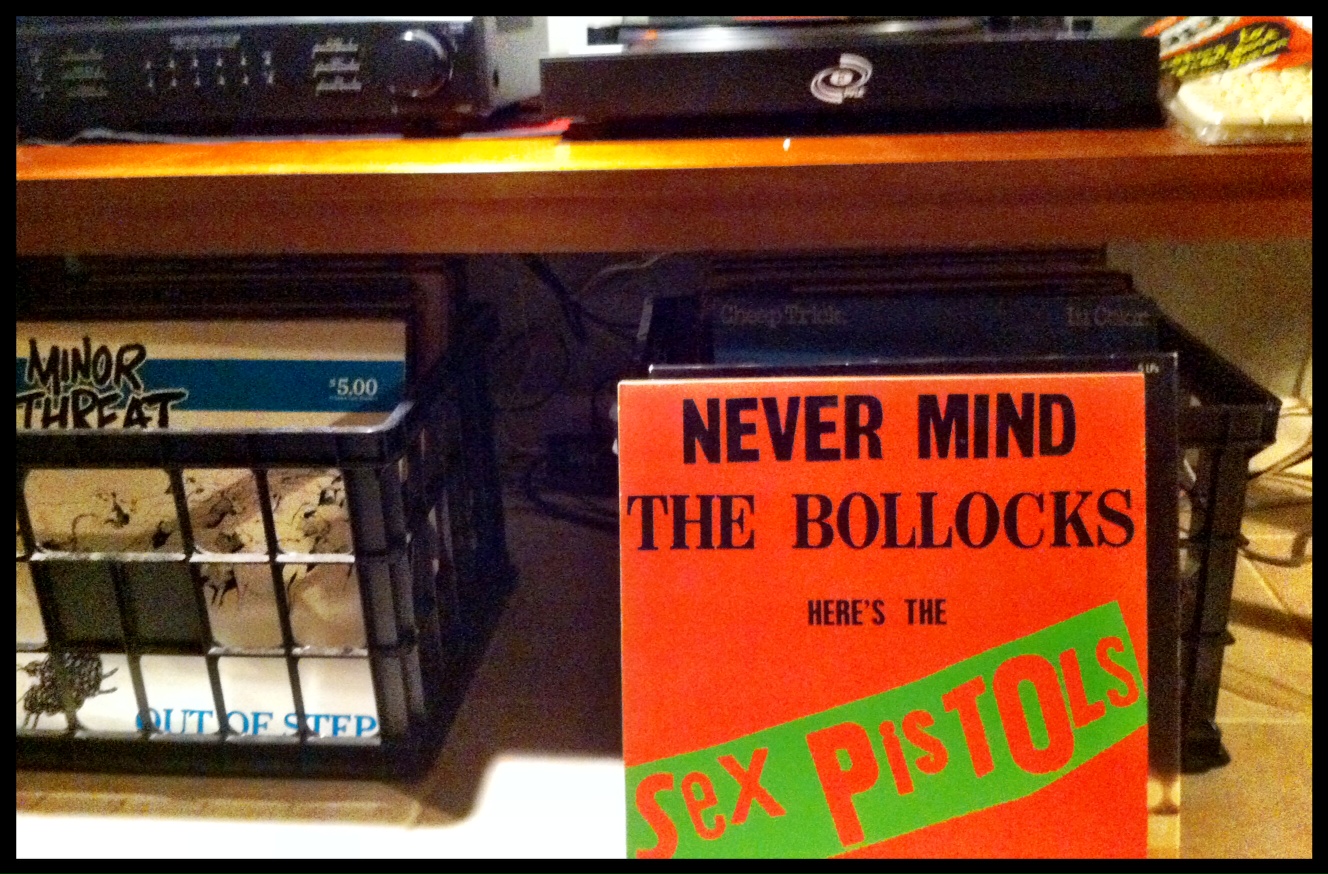
 But for whatever reason, independent of the soundtrack I was listening to, my summer reading started with the memoir I Slept With Joey Ramone, by Mickey Leigh, Joey's younger and much more hapless brother. Then as I neared the halfway point of that book, I acquired a copy of Punk Rock Blitzkrieg, by drummer Marky Ramone, which I would quickly turn to next. By then, the other bands had disappeared from my iTunes rotation, and a steady stream of Ramones vinyl replaced it. Most popular on my playlist was the double live album It's Alive, a document of their December 31, 1977 show at the Rainbow Theater in London, a show which Johnny himself considered their zenith performance. Personal faves Leave Home, Rocket to Russia, and Pleasant Dreams also got lots of airplay in my pick up. Finally, after finishing these two books, I read Johnny Ramone's unusual little autobiography, Commando.
Nota bene, I never felt the urge to read Dee Dee Ramone's own memoir, Poison Heart: Surviving the Ramones, because of his reputation as a notorious exaggerator, totally bereft of any serious credibility. I guess his mastery of punk rock metaphor, as the Ramones' prolific songwriter, went hand in hand with his daffy and loose relationship with the truth.
RAMONES DIVIDED
After first blasting out of the gate in 1976 and establishing the blue print for all post-Beatles modern rock, the Ramones quickly became its own Nation Divided. Joey occupied one coast, a Blue Stater in everything but name, steeped in the Sixties counterculture ethos of individuality, inclusivity, beauty, poetry, and a good time. Despite punk rock's disdain for filthy, smelly hippies, Joey for all intents and purposes, was one. On the other coast was Red Stater, Johnny, who, upon induction into the Rock n Roll Hall of Fame in 2002, famously accepted his award by saying "God Bless President George (W) Bush."* The two became opposite ends of the compass, who were so estranged that they all but ceased to communicate.
MICKEY'S TAKEDOWN
 Mickey Leigh did the best he could to posthumously deflate Johnny's legend. Aside from providing much appreciated insider detail about being in the pull of the Ramones' gravity, Leigh found many opportunities to portray Johnny as a bully, greedy and venal, and willing to beat women, and utterly callous about Joey's untreated mental illness, especially his OCD. I'm sure some of it was true, even the wife-beating, but I think Leigh's portrayal was a transparent attempt at giving his bitterness a target, a bitterness that was not really about Joey's treatment, but rather a bitterness that Leigh himself did not reap the meager benefits that his brother and the other Ramones enjoyed. Leigh is responsible for much of the Johnny-directed hate within Ramones Nation.
And it was this abiding repulsion that Leigh's book left me with that made me regret the reaction I had years ago, on the morning I learned that Johnny Ramone had died at the age of 54. I cried. Unabashedly and immediately, for probably a good five minutes, I cried. A full grown man, a father, and a professional, I cried. It just hit me hard. By the day of his death on September 15, 2004, Johnny was my favorite Ramone. He was a punk rock stalwart, a stoic warrior of the ethos who gave in to no one, even in his devotion to the Reagan Revolution, a hard worker who suffered no fools, pulled no punches, and -- his often cartoonish music notwithstanding -- kept the Mickey Mouse to a bare minimum. In that way, to me, Johnny was more a guitar-wielding Mercury astronaut than a musician. By 2004, I knew that it was Johnny who kept the Ramones train rolling all those years, in spite of Dee Dee's severe drug addiction, Marky's alcoholism, and Joey's erratic mental health, all with virtually ZERO support from the radio or MTV or the industry of cool that is popular music.** Even in the inclusive and supposedly free-wheeling world of rock and roll, the Ramones were misunderstood, uncool outsiders, who survived largely thanks to Johnny's sheer strength of will. Leigh's book made me question all that.
THE VIEW FROM THE DRUMMER'S SEAT
Then I read Marky Ramone's book. Marky rode the Ramones' drum throne the longest, and although he wasn't the architect of their relentless 16th note attack (Tommy pioneered that), he laid down the beat on many of their most iconic and enduring songs. I Wanna Be Sedated. Do You Remember Rock n' Roll Radio. Rock n' Roll High School. Pet Sematery.
A word about drummers: drummers are wired to be peace makers, conflict resolvers. Guitarists and lead singers may think they are the leaders, and ostensibly they are, but drummers lead from behind. I am a drummer, and I believe this. It is our beat that moves the whole room. The explosions of our cylinders propel the music. And instinctively, we want harmony and rhythm in our band, our tribe. Which explains, first why Marky's book was the way it was, and second, why I find it to be the most believable and honest.
Drummers also know that the rest of the band think the drummer is the most replaceable of its components. True or not (mostly not), it is what keeps drummers humble. It also makes them grounded, realistic, and clear eyed. Keith Moon and Ginger Baker are exceptions, not the rule, and Marky was not like them. As evidence of this, I learn, Marky rehabilitated himself by becoming an A.A. disciple. For the band.
And so Marky's memoir restored just a little bit of luster to Johnny's persona. Per Marky, Johnny is still conservative and reactionary and jingoistic, and he is still a bully and a manhandler of "his" women. But Marky affirms that he was also driven and, while demanding, also fair and just in his treatment of all the personnel that made the Ramones machine function. Joey is still an untreated mental casualty with paralyzing OCD and awful hygiene habits, but it's clearer in Marky's book that Johnny is doing his best to deal with Joey's faults -- and Dee Dee's chronic drug abuse and kleptomania -- in order to knit the band together enough, so they could climb onstage every night, 200 nights a year for 22 years.
REQUIEM FOR HIMSELF
Before he reinvented himself as a Ramone, John Cummings was a prototypical juvenile delinquent, attended military school by his own choice, and held down a job as an ironworker for years. He, Tommy Erdelyi, Jeff Hyman, and later Douglas Colvin, came from the same Queens neighborhood. They talked themselves into forming a band (John and Tommy's second after the Tangerine Puppets), renaming themselves and developing an aesthetic in the process, and changing the face of popular music entirely by inventing punk rock.
His autobiography is the most remarkable of its type I've ever read. I can only assume it was his own decision to name it after one of the Ramones' many great, loopy chest-beater songs, Commando. It's title says a lot about what Johnny thought of himself.
In the book, Johnny confirms almost all of the accusations leveled against him in some of the most matter of fact prose this side of Hemingway. Some of my favorite quotes:
"We started 1978 on tour with the Runaways, a band of dykes"
"I wrote the book on punk. I decide what's punk. If I'm driving a Cadillac it's punk."
"In my head it was never officially over until Joey died in April 2001. There was no Ramones without Joey. He was irreplaceable, no matter what a pain he was. I wouldn't have wanted to play without him no matter how I felt about him; we were in it together. He never quit. We broke up and he died ... I thought I wouldn't care and I did, so it was weird. I guess all of a sudden, I did miss him. But he made an impact through his life, so he's still among us."
His book also reveals that he meticulously kept track of the details in his Ramones life, in a collection of cheap vinyl-covered day planners available at drug stores. These were filled with terse notes:
-June 23, 1975: played for Sire (Records) - received offer.
-June 7, 1976: Album: 113 on Billboard.
-Dec. 31, 1977: Played London Rainbow Theater w/Rezillos, Generation X Att(endance): 2962 sold out.
This continued through the years until the end.
-March 16, 1996: Played Buenos Aries att: 43,000 Eddie (Vedder) at show.
In the end, I believe Johnny was less the selfish and heartless misanthrope that Mickey and Dee Dee would have him be. He was less the false friend who stole Joey's girl. Then again, he was also less the heroic figure climbing aboard the rocket to venture into space that I thought he was when I wept for him on the day he died. He was more like the asylum orderly supervising the crazies who all harbored misperceptions of him.
If Johnny were alive today, I'm sure he would gleefully be cheering our current president on without remorse. I'd give him that, even though I gravely despise that perspective. After all, this is America, and America is where punk rock was invented.
*The Joey-Johnny dichotomy may have its origins in the fact that Johnny ultimately stole Joey's girlfriend out from under him in 1980, and eventually married her. Johnny and Linda were together until the day Johnny died. But that is of little consequence to my summer.
**Sire Records, the Ramones own label, and particularly its owner and his wife, Seymour and Linda Stein, are excused from this criticism. They always stood by the Ramones with what little power and capital they had, even from the beginning when they first encountered the Ramones' unpolished act on the dingy CBGBs stage in 1976.